Showing posts with label Children and Mental Health. Show all posts

IMPROV FOR ASPIES!

The key to every social lesson I've taught my son, is to make it fun and appeal to his sense of humor.

When my son was younger and I had to prepare him for an upcoming social event, we would role play. I would pretend to be a person who had to introduce themselves to a group of peers. I'd enter and re-enter his room introducing myself in different, exaggerated ways. Shoulders hunched and eyes on the ground, mumbling my name and offering a really limp handshake or dragging my feet into the room, smacking my gum, eyes fixed on my phone, then keeping my arms crossed and not introducing myself at all. Then I would have him tell me what his first impressions of me were when I behaved that way.

Once the point was made, we'd practice the proper way to introduce ourselves (eye contact, firm handshake, shoulders back, chin up) and work on 'getting to know you' questions and answers. Once the lesson was done, we would take the game in a really exaggerated direction and take turns acting out really outrageous introductions and laughing at the impression those characters would make on a new group of people.

I had the bright idea, after showing him the best of Adam Sandler skits from SNL, to sign him up for a local improve class. Luckily, the first place we signed up with was a perfect fit. It was owned and run by some young adults (former Disney TV celebs) and was close to home. It took just one test class for him to agree to join up for weekly improv lessons. The energy was high, the classes were small, and the rules were loose - it was a perfect place for my boy to learn about himself.

The zanier the exercise, the more involved he would become, completely forgetting to be self-conscious or uncomfortable - because he and all the kids there with him were just 'acting' and it wasn't 'real life'. It wasn't long before I could see self-confidence begin to grow. Sadly, the classes weren't getting enough participants and they didn't run as often as I would have liked. We tried an improv class that was being offered at the community center, but the vibe just wasn't the same, it was too focused on the 'art of improv' and not enough on the 'just go for it' improv he had previously experienced. He tried out one class and didn't want to go back. At the end of the day, I think taking improv changed his life. He has been, increasingly, the class clown over the years since always searching for that great feeling that making people laugh gives a person.


I made is sound kind of easy, but he started out as a very frustrated boy. He couldn't articulate his feelings and would often go into 'rage mode' because of it. After doing improv on and off for a few years, he was better able to control his body and articulate his feelings. I believe that learning to manipulate and express himself in a safe and accepting environment like improv class, helped him to get in touch with his own voice and sense of self.

I also believe, that Aspies should, where possible, go into groups like this with 'typicals' to offer them the opportunity to learn from them via proximity by witnessing how they react and behave in different situations.

Do you have any similar stories or suggestions to help our Aspie kids? Leave a comment!

Good luck our there,
JB

Pin It

You and Me Against the World - Raising a Child With Asperger's


A Mother's Love

My son has Asperger's and I can't imagine him any other way.
D, my son, recently told me about a surprisingly philosophical and religious conversation he had with his best friend. The two twelve-year-old boys had a discussion about reincarnation. They decided that you can keep getting reincarnated and end up with the same family over and over again, but sometimes they will be your Dad instead of your Mom, or your cat instead of your dog, but nobody has any memory of the life they had before. I was quite impressed as this is my understanding of reincarnation as well, although we've never had it come up in our own conversations before. Then after some consideration, my son added that when you get to heaven you can choose whether you want to stay there or go back to Earth. With those big brown eyes, he looked over at me in the driver seat and asked, "Mom, when you go to heaven, can you wait there for me instead of going back as someone different?" My heart swelled and my eyes welled as I made my promise to wait there for him with open arms someday. And I will.

Good vs. Evil
We are not a church going family, although we've been known to drop in once every blue moon. We are, however, a believing family. The balance of good and evil is something my son clings to as an Aspergian boy. He seems to have almost too good of a grasp on what's right and what's wrong - he's a real stickler for the rules. It's great, but a little embarrassing when he catches me doing something I shouldn't be doing. This also causes problems at school when the boys his age always seem to be doing something that isn't exactly above par - I had to teach him that some things you just need to let go and not tell teachers about, otherwise you'll quickly run out of friends and allies at school.

The good news is that he's not going to be falling for peer pressure anytime soon. It's not that he doesn't mind taking the high road, it's that something in his brain just doesn't allow him to stray from his very rigid understanding of right and wrong. It's a blessing and a curse I guess.

I think he'd make a good cop someday, but as a mother, I wouldn't want him to have such a dangerous job. Truly, it's up to him, but I know he has a bright future. Morals are a rare thing in people these days and I think that he will stand out as an honest and reliable person when he enters the work force. Although, sometimes too honest.

Daddy Dearest

For years I've been trying to explain to my ex what my son needs from him. He's even had notes come home from teachers asking him to help boost our son's self-esteem. The biggest complaint year after year is that when he's with his Dad, he is ignored. Sure, he's fed and told when to go to bed, but otherwise pretty much ignored.

You may be thinking, well kids exaggerate, but I've lived with this man and I too was completely ignored for four long, nearly silent years. I have no doubt in my mind that L, my ex, should be diagnosed with OCD, and Social Anxiety Disorder, and possibly even Asperger's. Despite that, it's hard not to think of him as an jerk given the fact that he chooses to ignore the ones who love him most, and this includes his parents when they visit as well. But, I know under that almost impenetrable surface is a really really good man with a lot of issues that were never addressed, medicated, or even acknowledge and it really isn't his fault that he is the way he is. It makes me fight for my son even more, to ensure I'm providing him with the interventions required so he can have the soft skills his father is lacking and.

My son, who I love and adore, has Asperger's which causes him to have social anxiety along with some quirky behaviours, just like his father. Daddy is afraid of germs, son is afraid of buttons (see post: Afraid of Buttons? ). Daddy is something of a robotic personality, son still just loves to be tickled (he's almost a teen).

They are both kinda different in their own way, but when ones differences negatively affects the other, what am I supposed to do? My son needs a lot of affection, reassurance, attention, and interaction from me because he misses out on a lot of that from his Dad.

Here's a recent email to his Dad from me:

He needs face time – NOT screen time. He needs to know he can talk to you about school problems, kid problems, puberty, everything! He needs you to make the time to hang out, he will not decide that he should get off the computer/game to have human time – that’s your job – limit the screen time. Make rules about screen time and stick to them. (I know we’ve talked about this before) Read together, TV and movies are a good way to spend time together and discuss. Get outside, walk to the store or Tim Horton's for a hot chocolate, go for a drive, visit your mom or brother...anything! You need to fill up his weekends with sustenance. He’s old enough now to decided not to go to your place at all. What do you think he would do if given that option?

I know that last part was harsh, but when I have to spend every second week building him back up, it's an option that I'm seriously considering. I know he's not being abused in the normal sense, but I consider emotional neglect a form of abuse in this case when it's affecting my son the way it does. I've had to agree to stand beside L at my son's basketball games to coach him on the appropriate things to yell out (positive, rather then negative remarks). Bless his heart, the guy is trying, but without me there to intervene, remind, and encourage, it just goes back to the way it was. Frustrating? Yes, very. My son is beginning to suggest they go on walks when they are together, which is fantasic - I always praise them both when I hear about this.

Step-Father Follies
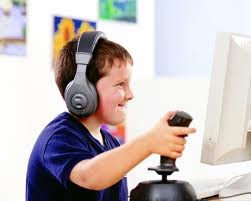
Because my Fiance has two active and very social children of his own, he is a busy guy. And when his kids aren't with us, he's not in 'Dad Mode'. And because my son annoys him at times just as much as his girls annoy me, we end up with another man ignoring my son. So we are two for two in the male role model department. The nice thing though, is that we do get out together as a family so my son does benefit from the family bonding, which is becoming less and less now that the kids are getting older and have their own agendas which don't include hanging out with us parent types. Since my son does all his socializing online (gaming), he's home with me most of the time, while V, my fiance, is out taxiing his girls around.


So Now What?
I have my son in ongoing social skills classes, he has an ABA worker, among other programs and activites we are engaged in through various organizations and school.
We are navigating the Aspergian waters pretty well now, I would say. He takes supplements (see article:Suppliments for Asperger's Syndrom - Guess What? They Work!) and they are truly making life better for us. I attend parent support groups and am becoming more active in the mental health community. We carry on. We just keep going. That is the most important thing that I hope my son learns from me, is to just keep going.

"Problem Solve" is a term we often use. When there is an issue big or small, we problem solve to find the solution - it's a valuable tool that is becoming more and more ingrained in his defeatist personality. My son is quick to become upset when things don't go as planned and so providing him with coping tools is important.


Do you have any questions about Aspergers? Do you have a story to share? Please leave a comment!

Good luck out there,
JB


Pin It

SUPPLEMENTS FOR ASPERGER'S SYNDROME - GUESS WHAT? THEY WORK!

Teachers have reported the following changes over the last 6 months, since my son started taking supplements prescribed for ASD:

  • Increased eye contact
  • Ownership around school work
  • A more alert child
  • Less negative facial expressions
  • Less prompting to stay on task
  • Self-regulation

Changes I've noticed at home:

  • All symptoms of depression are gone
  • Increased self-esteem
  • No more self-hate talk
  • Maturing
  • No more one word answers
  • Generally happier
  • More positive outlook

So what are these magic pills?


My son had began spiralling so deep into depression at the end of 2012 that I was beginning to consider anti-depressants for him. A combination of  social anxiety, miscommunications with peers, schoolwork stresses, along with low self-esteem and a short fuse were the key factors. We did breathing exercises, relaxation CDs, self-esteem worksheets, but nothing was working. He was slipping away into darkness while I struggled to keep my grip on his hand. Medicating my son was something I did not feel comfortable with and had turned my nose up to many times over the years. It was when my hair began falling out in clumps that I booked him to see his therapist and told her that if she recommend meds, I'd be on board.

Serendipitously, that week I attended a parent support group for those with children on the autism spectrum and there is where I met Dr. Sonya Doherty, Naturopathic Doctor. http://naturalcareclinic.ca/dr-sonya-doherty/ She talked about the link between dairy, wheat, and ASD; she spoke about supplements, and showed us a diagram of wheels on a cog and how those wheels turn more slowly for our kids in comparison to neuro-typical children. I booked a meeting with her the next day and, after her assessment, we were given a prescription for supplements and a recommended diet plan. She even gave me the opportunity to have an educational shopping trip with the clinic's nutritionist.

Benefits of treatment include:
  • Enhancement in receptive, expressive and spontaneous language development (was not an issue)
  • Increase in vocabulary, language complexity and appropriate use of language (saw this change)
  • Increased social awareness, interaction and appropriate play (saw this change)
  • Cognition, understanding and learning (saw this change)
  • Eye contact and responsiveness (saw this change)
  • Normalized behaviours and interaction including self-stimulating, self-injurious, tics and aggression (saw this change)
  • Understanding and feeling emotions, affection or increased tolerance to touch (saw this change)

How Did I Get Him to Take the Supplements?

I introduced each supplement in monthly increments. First was St. John's Wort (for depression), then the Vitamin B injection (best way to absorb this particular vitamin), then the specially prescribed Beneficial Oils
in pill form and we just added the specially formulated multivitamin, Brain Fuel to his regime.

My son had to learn to swallow pills which took some encouragement and now it is just a part of everyday life. Here's a trick that worked - practice swallowing Nerds candies starting with the small ones and working up to the larger ones. He understands why he takes each supplement and what the intended result is for each. I think that forcing a child to do something 'because I said so' isn't the way to gain their cooperation. I treat my son with respect, he has the right to know what I'm suggesting he put into his body and why. Although he has said that he does not want to cure his Asperger's because it makes him who he is, he does posses the desire to lessen the negative feelings and consequences that come along with the the disorder. The thing about Aspie's, I find, is that they are immature in some ways and wise beyond their years in others.

St. John's Wort
"Those who have Asperger's syndrome, an autism spectrum disorder characterized by impaired social and communication skills, can often find themselves feeling anxious, nervous, or depressed. One form of treatment for these symptoms is St John's Wort, a herbal supplement that can be purchased at health stores or online. The St John's Wort asperger's syndrome treatment option is helpful for certain people, particularly those with milder symptoms." http://www.healthguideinfo.com/aspergers-syndrome/p77260/

Vitamin B12 Injections
Dr. S. Jill James (who has recently received a NIH - National Institute of Health - grant for her research) has shown that children with ASD have impaired methylation and decreased levels of glutathione.  Supporting and/or repairing the underlying impairment and deficiency translates into increased social, cognitive and language development. http://treatautism.ca/b12-and-methylation/
Beneficial Oils"Two American researchers, Louise Patrick, SLP, and Ronald M. Salik, M.D., have recently reported the results of a clinical trial of the effects of a fish-oil supplement on language development and learning skills in children with autism or Asperger’s syndrome. Fish oil provides essential fatty acids (EFAS), which are critical for brain health. Children with attention deficit, autistic, and related disorders have been shown to have significantly lower levels of EFAS in their red blood cells." http://www.totalhealthmagazine.com/features/childrens-health/fish-oil-supplementation-and-autism-aspergers-syndrome.html

Brain Fuel
"Brain Fuel was developed by Dr. Sonya Doherty in conjunction with her sister, a biomedical toxicologist and naturopathic doctor specializing in fertility treatment.  The Brain Fuel ingredients are based on the most recent research on essential fatty acids and development. Brain Fuel is used to promote language, social and cognitive development for children with autism, PDD, Asperger’s Syndrome, OCD, TS, ADD and ADHD.  It combines fat soluble vitamins (A, E, D, and K) with high levels of EPA, DHA with a small amount of GLA.  Brain Fuel is in a phosopholipid base that increases effectiveness. This unique essential fatty acid support is made by Douglas Laboratories and distributed by the Natural Care Clinic." See the website above to order online.
The only drawback is that the supplements can run me about $100 per month, but they are well worth it, given the results. I suspect that changing his diet will even further increase his abilities, and maybe now is the time to start. I also hope to be able to switch him to the pill form of vitamin B, so that I don't have to continue giving him a needle in his backside into his teen years.

It is six months later and his social skills still need a lot of work, but I couldn't be more thrilled with the report I received from the school. Now that we have added the Brain Fuel supplement, I look forward to seeing even more progress. Of course supplements alone can't do it all. A support team of professionals, school supports, and social supports are all key factors in bringing your child to a level of Independence that will give him solid ground to stand on as he navigates the teen years and adulthood.

If you have any questions regarding this subject, please leave a comment. I'm happy to share my experience with you or learn from yours.

Good luck out there,
JB

Pin It

Getting My Boy to Read (And Love It!)

My son reads at almost a grade nine level. He's in grade 7. You'd think that he'd like to read, right? Wrong.

It's partially because of his sensory issues (he doesn't like the feel of paper) (see Asperger's - The Road to a Diagnosis) and partially because he's always in a rush and doesn't slow down to digest what he's reading unless it's something that really interests him, like YouTube comments. Although his reading ability is very high, his reading comprehension is quite low based on testing, and getting him to read books seems to be the solution, tied in with discussions around what he has read.

I took a class this summer around learning disabilities and found that some kids just don't compute the words they are reading, sometimes it's easier for them to grasp and retain information when it is read to them by one of the many text to speech programs now available. I didn't want to discourage reading, so we fooled around on Audible.com, listening to samples of books, until we found one that he liked; Alcatraz vs. the Evil Librarians, by Brandon Sanderson. We swung by the library that same day and picked up the book to supplement our audio story telling experience.

Normally we read in his room, but I decided to take the reading out of the bedroom and make it an anywhere in the house activity. That evening, I made some hot chocolate while my son grabbed some blankets and pillows for the couch, what we would have done for special movie watching nights. Then we hunkered down on the couch together to read along while the story played on the laptop, filling the room with an air of intrigue and adventure.

Are you thinking grade seven is too old to be having read-alongs? I wondered that myself, but he was reading along in the book and that's what matters to me right now. He was also asking for one more chapter before bed, which was music to my ears. That night as I left his room, he asked if he could stay up a little longer to do some reading. Mission accomplished.

I know my son is benefitting, not only from the reading activity and discussions, but from our additional quality time together, and so am I. I think my next step will be to buy him an eReader to eleviate his need to hold on to a paper book, which gives him goose bumps. He will be more relaxed and be able to enjoy the reading activity even more - I hope.

If you have any suggestions for great boys books, please leave a comment.

Good luck out there,
JB Pin It

How to Talk So Kids Will Listen & Listen So Kids Will Talk

The ideals in this book are not tools to manipulate your children into obeying your will, they are a way to communicate empathy, love, and acceptance at times when those are the hardest emotions to convey. The most satisfying result is not when your children do as they should, but when they begin to treat themselves and others with empathy and become problem solvers themselves.

How to Talk So Kids Will Listen & Listen So Kids Will Talk
by Adele Faber and Elaine Mazlish

Putting the book into action:

Note This!
My son doesn't always remember to clean up his crumbs after breakfast, so I thought it would be cute to leave him a note on the table: It's a bummer to see crumbs here :)
"I always clean up my crumbs!" he barked at me upon sitting down and seeing the note.
It was my first attempt at one of the tricks from How To Talk, and they did say not to worry if it doesn't work every time. "I was just giving you a little reminder," I said, and left it at that, feeling like a bit of a failure.

Monkey See, Monkey Do
I guess he wasn't in the best mood that day, because not long after the note incident, my son barked at me for asking a simple question. I hate to admit it, but normally I would just ignore something like that, but this time I said, "I didn't deserve that, I'm trying to be nice even though we are both tired and rushed this morning."
"I know, I'm sorry," came the reply.
Once we made it to the car, I barked at my son for no reason and, without hesitation, he said to me "Mom, I'm trying to be nice, I don't think I deserved that." And he was right. I apologized and we headed out of the driveway to start our day.
Oh The Profanity!
Last night, as I was making dinner, I heard my son swearing in the basement at whomever he was online with playing video games. The words were F-You B*tch. He was talking to a guy, not a girl, just so we're clear on that. I called him off his game and told him we had to talk about his language, but not right now. Frankly, I didn't know how to approach it at that moment and wanted to give him a chance to think about it as well. I said we'd talk about it at bed time. He was anxious, I could tell, but I stayed firm - we'll talk about it later. I recalled the problem solving exercise from the audiobook I'd been listening to in my car and decided to give it a go.


Later that night I grabbed a paper and pen and sat beside his bed. "So what was all that swearing about?"

He told me that the group of kids that were bugging him last week (we had to speak to the school about it, the boys made up and were playing online together again) were bugging him again. "I get so mad that I swear at them." Tears welled up in his eyes.

"We have a problem," I told him. "Let's figure out a solution." It sounds to me like you get frustrated and angry when these boys bug or tease you online and that causes you to swear back at them. And it makes me feel shocked and embarrassed, and a little angry too, that my son uses words like that. So let's write down some possible solutions."

1. No more gaming (mine)
2. Remove those guys from my friends list online (my son's)
3. Tell those guys at school tomorrow that I got in trouble for swearing and my mom says I can't play online with them anymore, that they are a bad influence on me. Then remove them from my list tomorrow after school. (my son's)

My son's solution was clever - he was able avoid them online now without any sort of stigma about it - as far as they knew, he was forbidden to play with them online. The truth was that he just doesn't have fun playing with them. But this way, Mom takes the blame and he saves face. And, of course, he doesn't feel the need to defend himself against them by swearing.

I was so impressed with the process, I congratulated my son on his decision making and problem solving skills and decided next I was going to try this on my fiance. That night I told V that any complaints or issues would only be addressed on Sunday nights. The only language I would accept from him throughout the week would be a simple "I have an issue/problem/complaint, we'll talk about it on Sunday." I feel good about this. I plan to use the exact same problem solving technique I used with my son, because it's a good way to keep myself calm as well when things need to be hashed out.
Viscous Cycle
There's a trend in my house, albeit improving, that if my finace gets up in the morning and sees that my son has forgotten to put the bean bag on the couch (the dog will sleep on it and get hair all over it otherwise), he reports back to me, annoyed, setting off my mood, knowing that I now have to give my son crap first thing in the morning, ruining the start of his day too. Not a fun situation at 7:00 AM.

I had begun threatening to take away his Xbox if he kept forgetting. This morning it happened again. V gave me the annoyed report, I may have replied with something immature not wanting to deal with it, and then approached my son's room, knocking on the door because I knew he was getting dressed for school. "You forgot the pillow again and you'll have to vacuum up the couch before you have breakfast."

My son, in a disappointed tone replied, "Does that mean no Xbox tonight?"

"You know, you've been doing a really good job remembering the pillow, we all forget things sometimes, you're only human. Vacuum up the couch and we'll talk about it after breakfast."
D vacuumed the couch without complaint and then we discussed ways that we could help him remember. I let him come up with the ideas this time. He said, "I can double check before I leave the room." (a tactic I had suggest to him over and over again since this all began). I didn't say anything. "I can write myself a note and put it on my Xbox so it reminds me when I'm done."

"That's a great idea," I said.

HE USED THE NOTE IDEA FROM THE FIRST DAY! I was doing a happy dance in my head. Fingers crossed that it works for him.


Good luck out there,
JB


Pin It

Asperger's Syndrome - The Road to a Diagnosis

My son used to ask me, "Why am I the way I am?"
Once we got the diagnosis, I finally had an answer for him.

When I told my son, age 11, the news that he had been diagnosed with Asperger's, I took him to the library. We go there to study and do homework sometimes because its quiet and there are no video games in the basement calling his name. There are less distractions.
Pin It

Afraid of Buttons?


How My Son Learned to Take His Phobia by the Collar
At around the age of four, my little guy developed a very odd behaviour. My little cuddle-monkey would no longer let me within five feet of him when I was wearing clothes with buttons on them, and he began insisting I change into something button-free when I arrived home from work. I suspected the behaviour had something to do with the divorce, as we had just moved into our first apartment. It wasn't until two years later, as we were riding up the elevator, that I realized the button thing was still in full swing!

I hopped on the Internet as soon as we got in the door, and wouldn't you know it, he wasn't the only one! I found so many entries from people who 'hate those little buggers' that I was at once amazed and relieved. All the things my boy had told me he hated about buttons were exactly the same words used by these other sufferers. One person described trying to go on a date and ignore the fact that their companion had "little plastic cockroaches" on their shirt. I know I wouldn't want to be near somebody if they had cockroaches on their shirt! 

I suddenly had a better understanding of how my son felt and had been feeling for so long. Although I had accomodated him over the years, guilt washed over me for not being more kind to him about his feelings toward buttons, out of ignorance. I printed all the testimonies I could find and read them to him one by one. I could literally see the tension releasing from his shoulders. Just knowing that he wasn't alone gave him his dignity back. He no longer felt like a weirdo, but like a kid who just didn't like buttons. I printed the information and gave it to everyone in his life. Most people laughed when I told them about the phobia, but seemed to take it more seriously when I called it by its proper name, Koumpounophobia. He was too young to start therapy, as it requires the sufferer to actually want to overcome the affliction, and a certain level of maturity. So when he was a bit older, around eight, we visited a therapist. She gave me some ideas on gradually introducing buttons into his day, first with pictures, and then moving on in bigger steps.

I created a program for him that we measured using Lego diagrams to mark the successful completion of each stage of the therapy. Throughout all of the following activities we also practised breathing techniques, because he would often hold his breath when faced with a button. It takes a lot of practice. And patience.

First, I gathered pictures of buttons and used them in mathematical equations (one yellow button plus three blue buttons equal how many buttons?). Then we moved onto memory games. I printed out sets of pictures of different coloured buttons, cut them into cards and laid them all down flat like a memory game. He would not use his hands to turn over the paper at first, he found a pair of tweezers and used those as his turning over tool. Clever right? Eventually I got him to turn them over using his hands, and then we focused for a while on touching the pictures of buttons. This all happened over the course of a few months, and we did it every night. We used counters starting at ten seconds of touching the picture for a week, then twenty seconds for a week, then thirty seconds for a week. I am a very patient woman - and wine helps.

We eventually moved onto real buttons. We started over at adding and subtracting, then touching for ten seconds, twenty seconds, and thirty seconds for a week each. Next was holding one in his hand for the same intervals.

After that, we practised hugging me while I was wearing a buttoned shirt. For ten seconds, twenty seconds, and thirty seconds. Rewarding is important, sometimes I would give him a few bucks after a session, but not always. I rewarded every single step with words of encouragement. "Great Job Today! You are so brave! I'm so proud of you!"

The entire process took about a year. My son still won't wear buttons, but they no longer distract him at school when classmates or teachers are wearing them. He hugs me and other family members if we are wearing them, without hesitation.

If you or anyone you know has a child who suffers with this phobia, I would be glad to offer any advice or assistance to help. There are plenty of resources on-line as well.

Koumpounophobia is a phobia of buttons. Koumpounophobia affects people of all ages and is a lot more common then most people think. Sufferers of koumpounophobia may not like the sight, touch, or smell of buttons, and some even have trouble listening to the "b" word. They may or may not mind the buttons on jeans. http://www.urbandictionary.com/products.php?term=koumpounophobia&defid=3457180 


Good luck out there,
JB Pin It